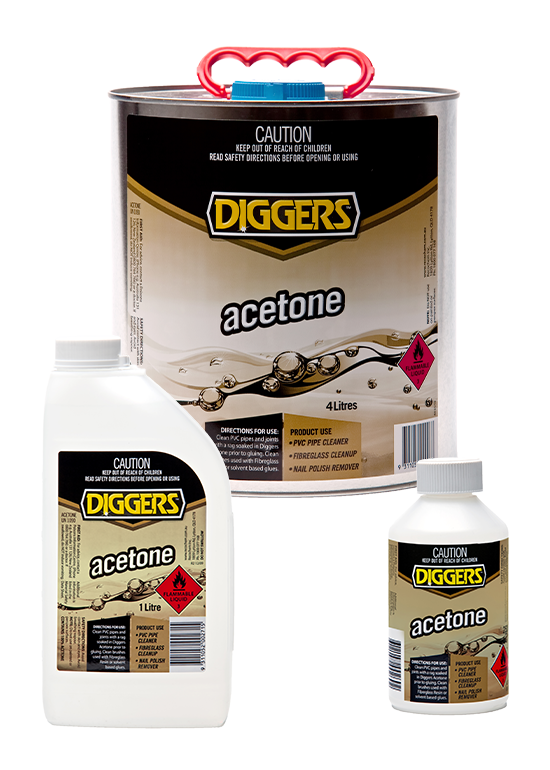
DIGGERS™ Acetone
Most people hear DIGGERS™ Acetone and think of nail polish remover. But it’s also one of the hardest working solvents in the shed, cutting through difficult resins, waxes and adhesives, and tackling a surprising range of jobs around the home, garage and workshop. As with all strong solvents, always do a spot test on a small hidden area before use, as acetone can damage or discolour certain materials.
Typical Uses
- General DIY clean-up
- Cleaning PVC pipes prior to gluing
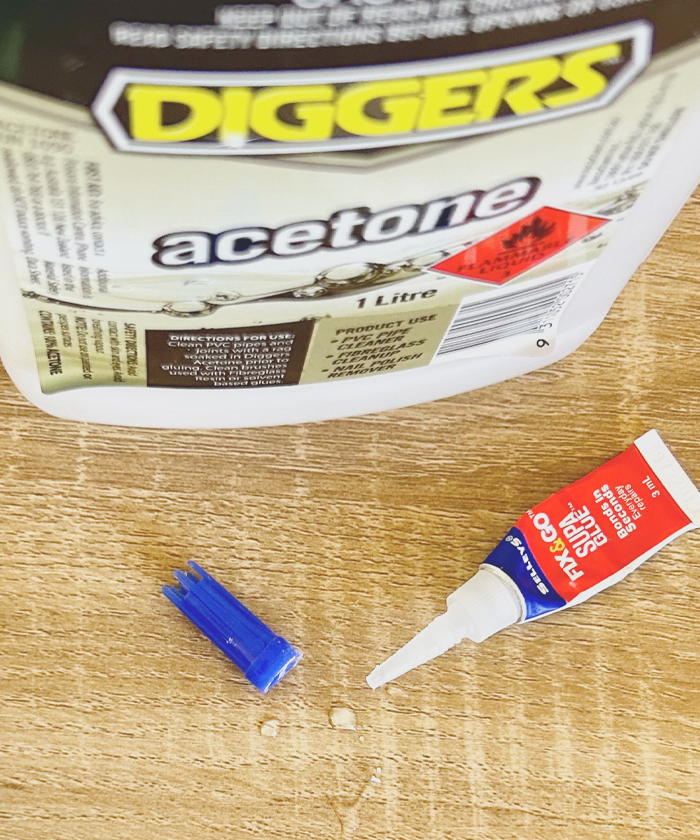
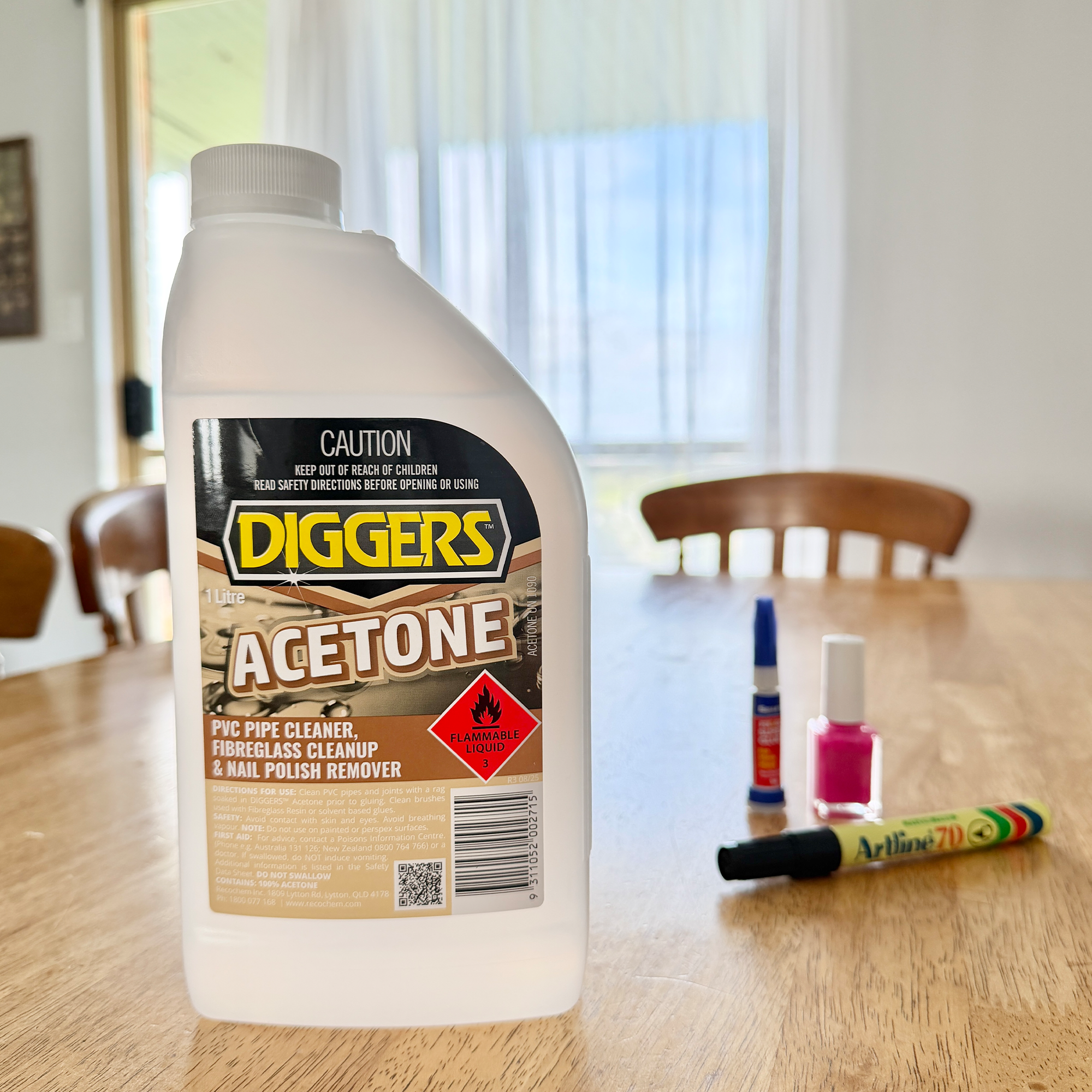
- Removing nail polish and adhesives (including Superglue)
- Cleaning fibreglass brushes and tools before and after use
Features
- Widely miscible – able to be mixed to form a solution
- Mixes completely with water
- Quick drying (high evaporation rate)
How to use DIGGERS™ Acetone
For Cleaning PVC Pipes
1. Soak a rag in DIGGERS™ Acetone.
2. Wipe PVC pipes and joints thoroughly before gluing.
3. Always test on a small area first to ensure the material is not damaged.
For Fibreglass Cleanup
1. Use DIGGERS™ Acetone to clean brushes used with fibreglass resin or solvent-based glues.
2. Work the solvent into the brush to remove all residues.
Safety Tip: Highly flammable. Do not expose to naked flames or other ignition sources. Store in a cool, dry place away from direct sunlight. Always wear suitable protective clothing, gloves, and eye/face protection. Do not use on painted or Perspex surfaces.
Additional Uses
Important: Before trying any of the uses below, always do a spot test on a small, hidden area first. Acetone is a powerful solvent and can damage or discolour certain surfaces, plastics, painted finishes, and synthetic fabrics. If you are unsure, test first and allow the area to dry fully before proceeding.
In the Workshop
- Smooth out FDM 3D prints made from ABS plastic by lightly applying acetone with a brush or by placing the print in an acetone vapour chamber. The solvent softens the surface layer, fusing the print lines together for a cleaner, stronger finish.
- Clean fibreglass resin tools and brushes before the resin cures.
- Prep carbon fibre and fibreglass surfaces before bonding or laminating. A quick wipe removes oils and release agents that can prevent adhesion.
- Degrease metal parts before welding, painting, or applying primer. Acetone evaporates quickly and leaves no residue.
- Clean epoxy resin from mixing tools, squeegees, and rollers before it cures. Once cured, acetone won’t dissolve it, so act fast.
- Remove contact cement and construction adhesive residue from tools, clamps, and work surfaces.
- Dissolve old two-part adhesive residue left on car body panels or trim before refinishing.
In the Shed & Garage
- Assist with removing paints and stripping old varnish from surfaces. Apply to the surface with a cloth and let it penetrate before wiping away.
- Remove silicone, wax, tar, and paint residue from surfaces and tools.
- Remove superglue from tools and work surfaces.
- Clean spray gun cups, needles, and nozzles after using solvent-based paints or lacquers.
- Dissolve the sticky residue left behind by automotive tape, vinyl decals, and old stickers.
- Clean carburettor components and small engine parts. Acetone cuts through varnish deposits and fuel residue that builds up over time.
Arts, Crafts & Making
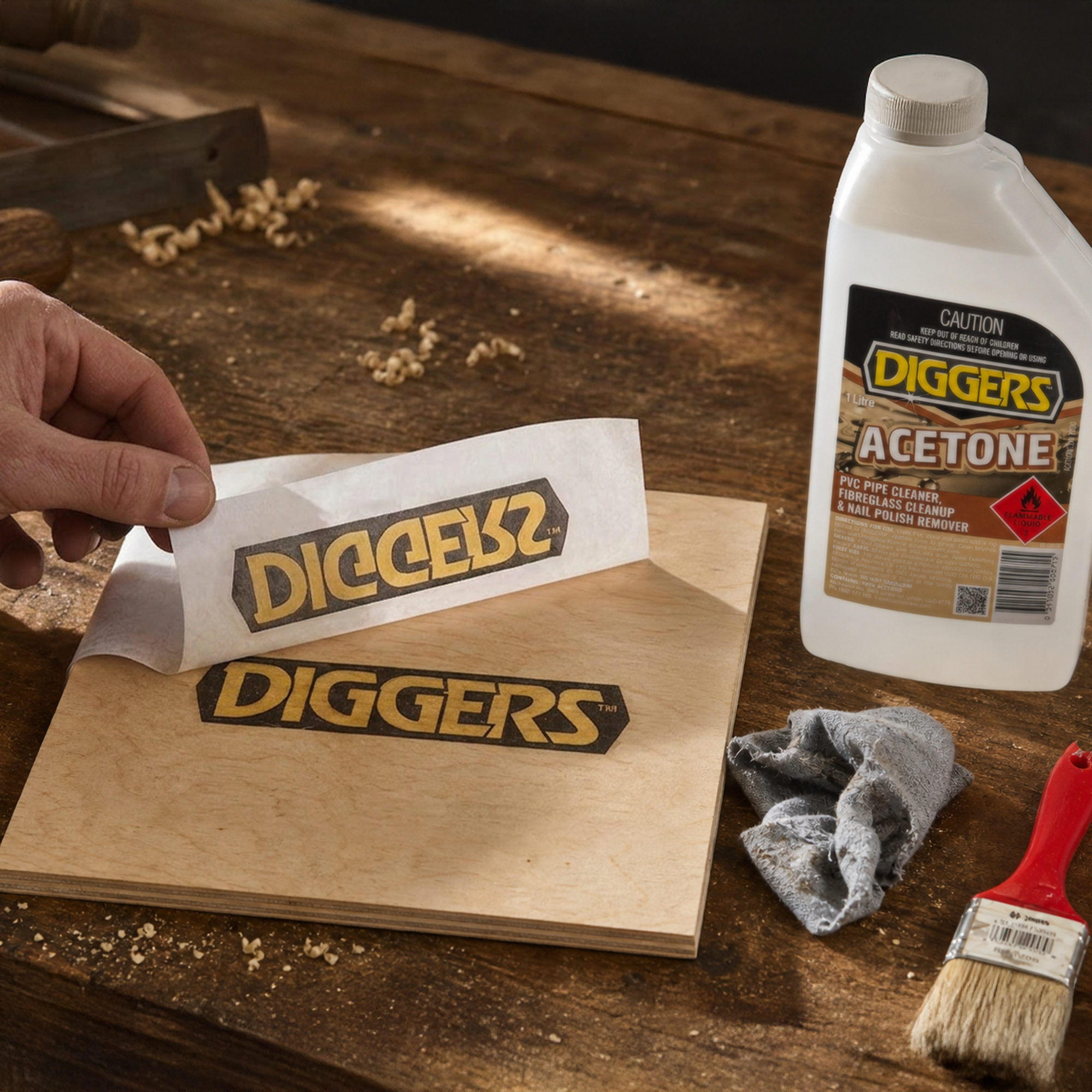
- Transfer inkjet-printed images onto surfaces like wood or leather by applying acetone with a cloth and rubbing the paper away.
- Remove dried acrylic paint from palettes, brushes, and work surfaces.
- Clean silk screen frames and squeegees after printing with solvent-based inks.
- Restore cracked and peeling graphics on cotton t-shirts. Dab a small amount of DIGGERS™ Acetone onto a cotton ball and apply it directly to the affected area. The acetone softens the print material, bonding the cracked edges back together and reducing the appearance of peeling and cracking. Always do a spot test on a hidden area of the fabric first, and note this works best on 100% cotton or mostly cotton garments. Avoid use on polyester or synthetic fabrics.
Around the House
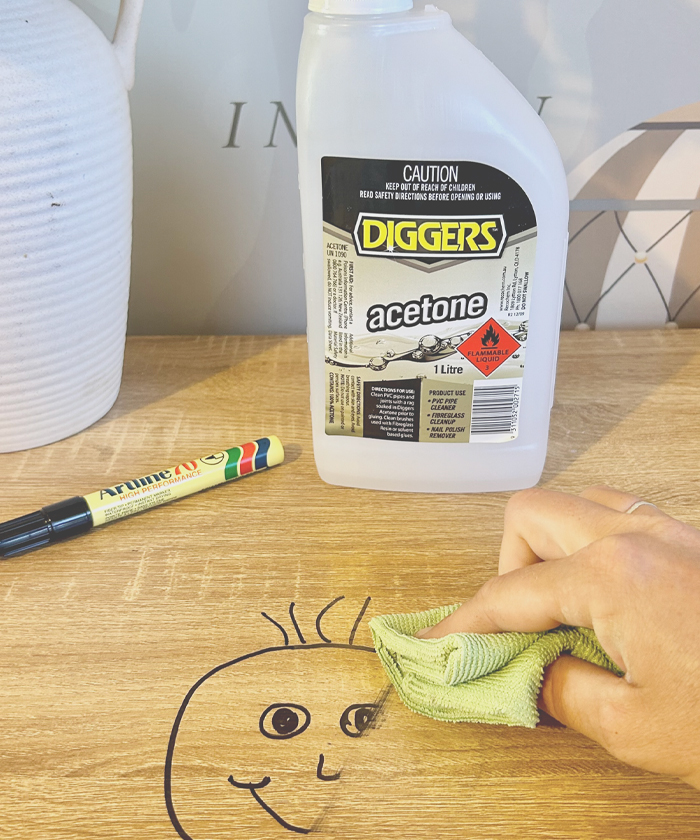
- Remove permanent marker marks from hard surfaces, dissolving the ink as it is wiped away.
- Remove residue left behind by old stickers or glue from glass, tiles, and sealed surfaces.
- Clean the soleplate of a clothes iron if it has a buildup of residue from synthetic fabrics. Apply carefully to a cold iron and wipe clean.
Beauty
- Sanitise beauty tools such as tweezers, nail clippers, and cuticle pushers.
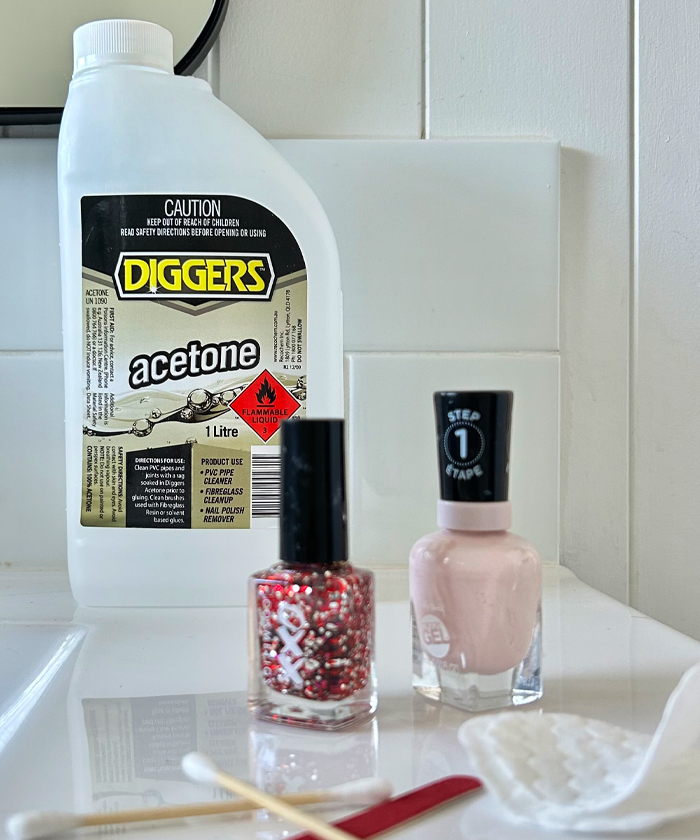
- Add a drop of acetone to nail polish that has started to dry up or thicken in the bottle to restore its consistency.
- Remove shellac nails by soaking a cotton ball with acetone, placing it over the nail, and securing with foil. Allow to soak for a period of time until the polish lifts away cleanly.
- Strip old nail polish from acrylic nail extensions.
Now available at Bunnings Warehouse, Mitre10 & all good hardware stores.


Frequently Asked Questions (FAQs)
Q: What is DIGGERS™ Acetone used for?
A: It is used for general DIY clean-up, cleaning PVC pipes prior to gluing, removing nail polish and adhesives (including Superglue™), and cleaning fibreglass brushes and tools.
Q: Can I use DIGGERS™ Acetone on painted or Perspex surfaces?
A: No. It is a very strong solvent and may damage painted or Perspex surfaces.
Q: Is it safe to use near flames?
A: No. DIGGERS™ Acetone is highly flammable and should not be exposed to naked flames or other ignition sources.
Q: Can I mix it with water?
A: Yes. DIGGERS™ Acetone is widely miscible and mixes completely with water.
Q: How should I store it?
A: Store in a cool, dry place away from direct sunlight due to its high vapour pressure.
Q: Are there any protective measures I should take?
A: Always wear suitable protective clothing, gloves, and eye/face protection when using this product. Keep away from heat, hot surfaces, sparks, open flames and other ignition sources.
Q: Do I need to test before use?
A: Yes. Always test a small area first, as DIGGERS™ Acetone is a very strong solvent that may damage some plastics and other materials.
Q: Can I use DIGGERS™ Acetone to smooth 3D prints?
A: Yes, but only for ABS plastic prints. Acetone dissolves the surface of ABS, which can be used to smooth print lines or bond parts together. It will not work on PLA, PETG, or most other filaments. Always work outdoors or in a well-ventilated area, away from any sources of ignition, and wear gloves and eye protection.
Q: Will acetone remove varnish from timber?
A: Acetone is effective at dissolving shellac and lacquer-based finishes from timber. It is not particularly effective on polyurethane varnish or oil-based finishes. Always test on a small hidden area first, work in a ventilated space, and wear gloves.
Q: Can I use DIGGERS™ Acetone to clean spray guns and painting equipment?
A: Acetone can be effective for cleaning metal spray gun components such as tips, needles, and nozzles after use with solvent-based paints and lacquers. However, it should only be used on disassembled metal parts. Keep acetone away from any plastic cups, rubber seals, and gaskets as it can cause damage. Always disassemble the gun first and only soak or wipe the metal components.
Q: Can I use acetone to fix a cracked or peeling graphic on a t-shirt?
A: Yes, for cotton or mostly cotton garments. Dabbing a small amount of acetone onto the affected area softens the print material and helps bond the cracked edges back together, reducing the appearance of peeling and cracking. It is not suitable for polyester or synthetic fabrics, so always check the care label and do a patch test on a hidden area before applying.